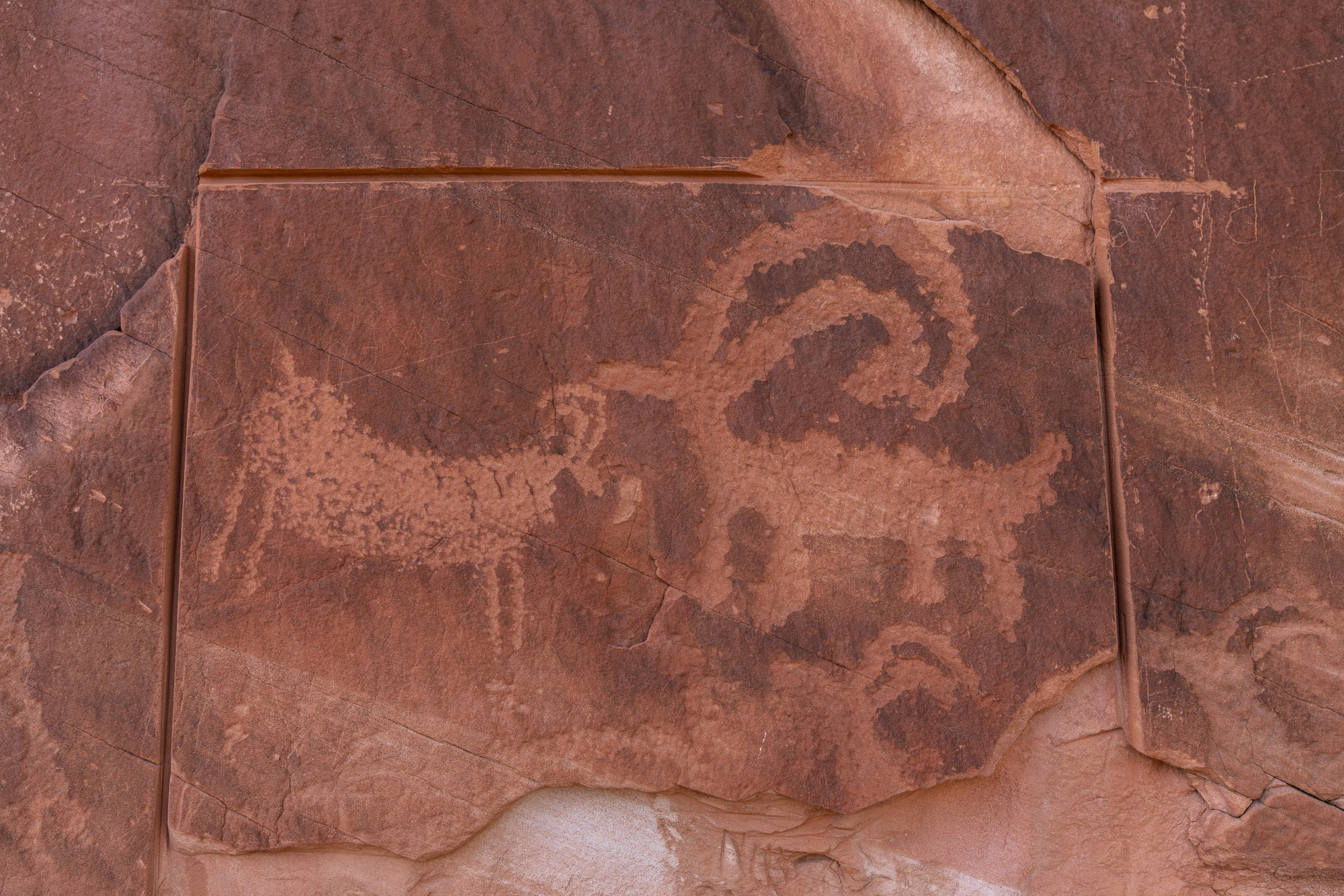
The mission of the Ancient Art Archive is to preserve and share humanity’s oldest stories.
Sometimes that means celebrating extraordinary places and the people working to learn from and protect them. Sometimes it means speaking up when those places are threatened.
Right now, several of America’s most significant rock art sites are facing threats that could profoundly affect their very existence. The news can feel overwhelming. But these places have endured for thousands of years. Generations of people have worked to protect them.
Now, it’s our turn to step up. We can be part of that story too. Below are some of the challenges we’re watching and ways you can help.
The Wall to Nowhere in Val Verde, Texas.
No matter where you stand on immigration or border security, the border wall placement proposed for Val Verde County is colossally dumb.
The Canyonlands of the Lower Pecos are home to hundreds of rock art sites representing a remarkable 4,000-year tradition of painting, ceremony, and human connection to this landscape. Individual sites like Panther Cave contain monumental murals created thousands of years before the pyramids of Egypt.
They are irreplaceable pieces of American culture.
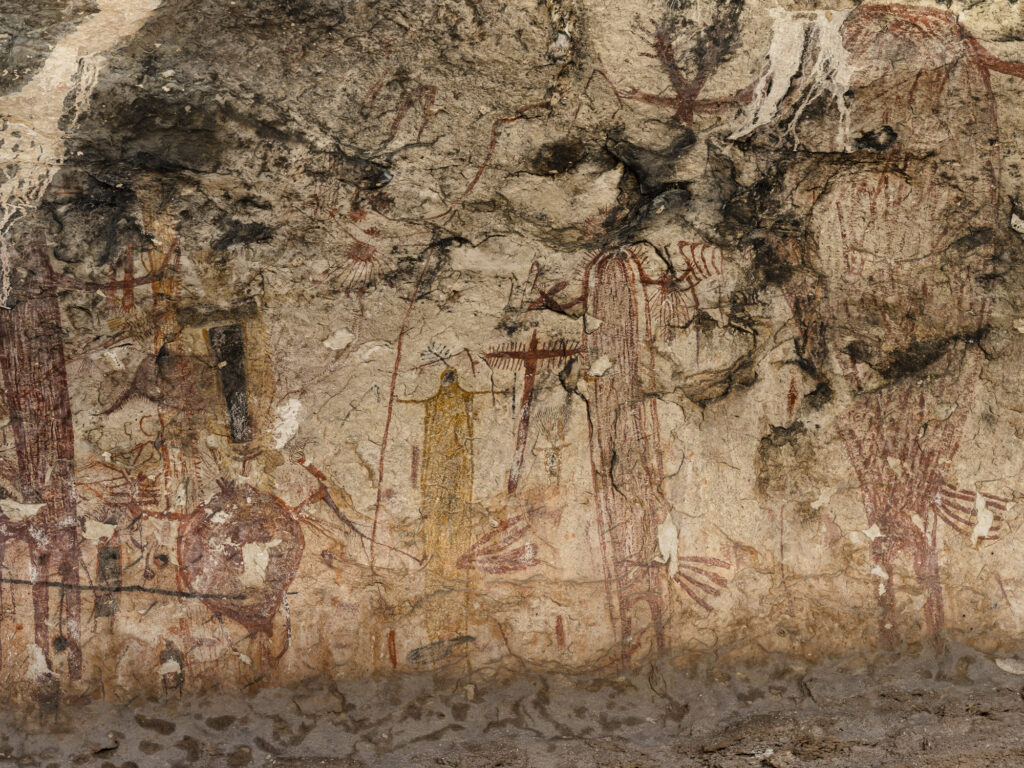
The proposed barrier will slice through art sites and cut off access to some of America’s greatest artworks. Large parts of Seminole Canyon State Park as well as countless private ranches will be rendered inaccessible, essentially cut off from the United States and handed over to Mexico.
The Department of Homeland Security has awarded a $2.6 billion contract to construct a vehicle barrier through the Canyonlands of Val Verde County. The proposed route threatens archaeological sites and would severely restrict access to places including Seminole Canyon State Park and surrounding private lands.
What makes the proposal particularly difficult to understand is the landscape itself.
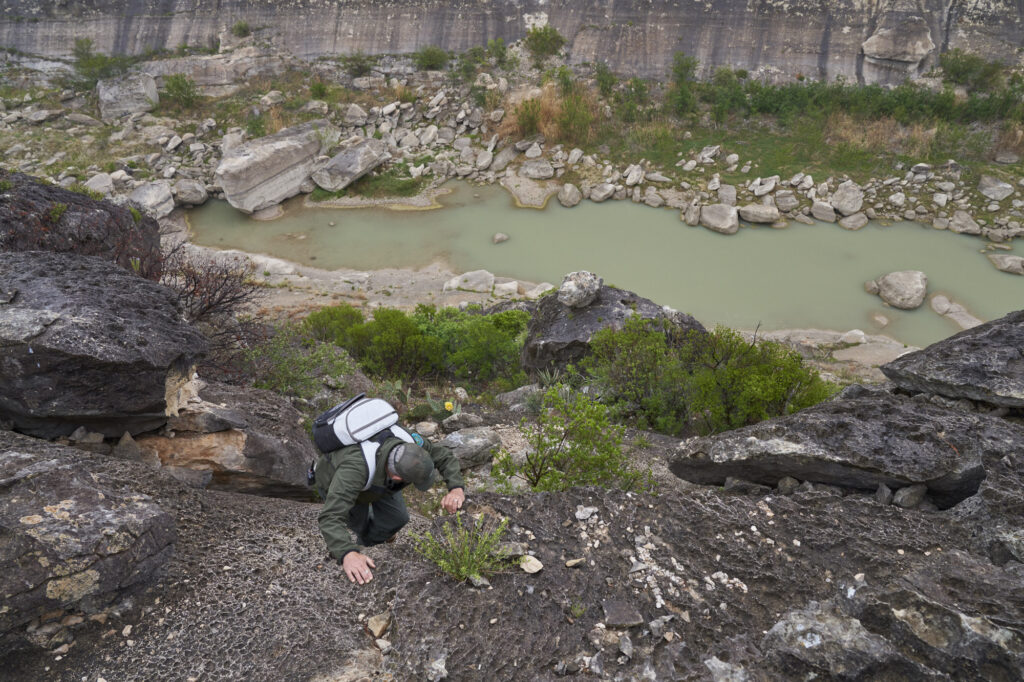
This is one of the most rugged and inaccessible stretches of the U.S-Mexico border. Sheer canyon walls and 200-foot cliffs rise from the Rio Grande. I have spent time in this landscape. Vehicles cannot simply drive across it right now. Virtually all of the immigration violations in the Del Rio Border Patrol Sector (Val Verde County is part of that sector) occurred at Eagle Pass over 100 miles to the Southeast. Border violations in the Del Rio Sector overall are already down over 89.6% from 2025.
We simply don’t need to spend the $2.6 billion slated to build a vehicle barrier along this stretch of canyon. There is another way.
Highway 90 already provides an existing transportation corridor through the region and a barrier to northbound travel. If a barrier is still deemed necessary, using an existing right of way could provide a far more financially responsible alternative while avoiding damage to priceless rock art sites.
These ancient sites cannot advocate for themselves. That’s where we come in!
How you can help
Sign Shumla’s petition. Our friends at Shumla Archaeological Research & Education Center have pioneered the research and conservation of Lower Pecos rock art for decades. You can support their efforts by signing the petition (HERE).
Contact Your Congressman. Val Verde County’s congressional seat is currently vacant, so contact your congress person and tell them to stop this wasteful use of tax dollars. Use this link to find your representative (HERE).
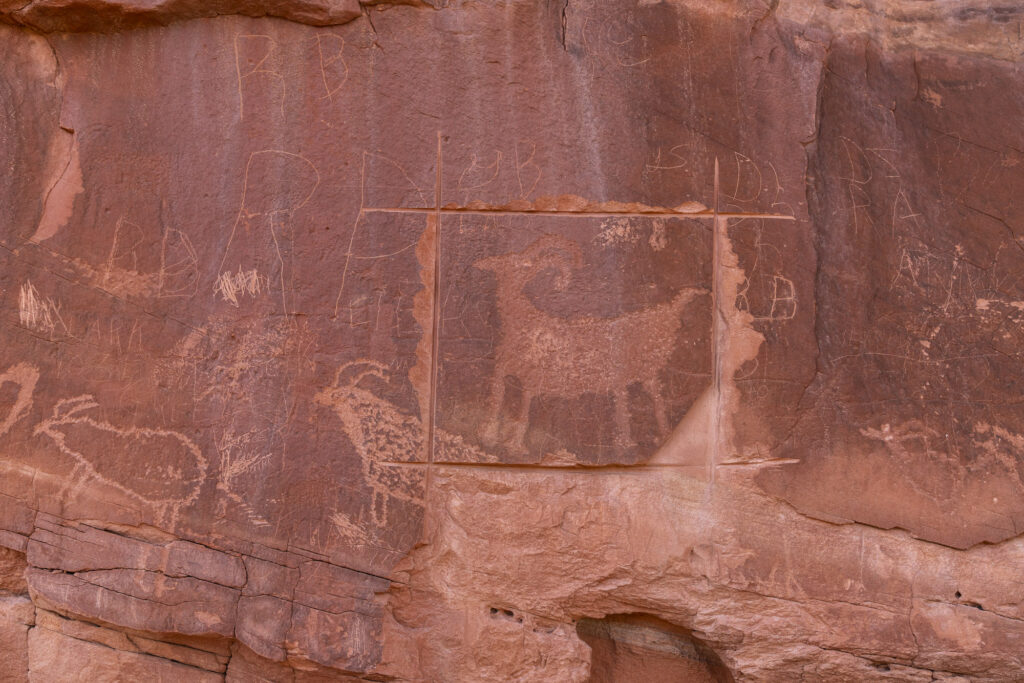
Bears Ears and Grand Staircase Escalante National Monuments
Bears Ears and Grand Staircase-Escalante are more than spectacular landscapes. They hold thousands of years of human history: rock art, archaeological sites, ancestral places, and living connections between indigenous communities and the land.
On July 13, with the support of the Utah Governor and congressional delegation, the President issued proclamations dramatically reducing protections for both Bearss Ears National Monument and Grand Staircase-Escalante National Monument (details here). The new boundaries represent reductions of roughly 90% of their previous footprints.
For those who have worked for decades to protect these places, the decision is deeply painful. It also disregards decades of partnership and coalition-building among Tribal nations, conservation organizations, local communities, researches, businesses, and land managers.
It’s important to remember that protecting these landscapes has broad support. Polling has consistently shown strong public support for national monument protections nationally, and in Utah, polls indicate that over 70% of the state residents oppose the reductions. Communities and businesses in remote San Juan, Kane, and Garfield Counties have also built livelihoods around visitors who come to experience these remarkable landscapes.
The loss of monument protection does not mean these places have lost their meaning … or their advocates.
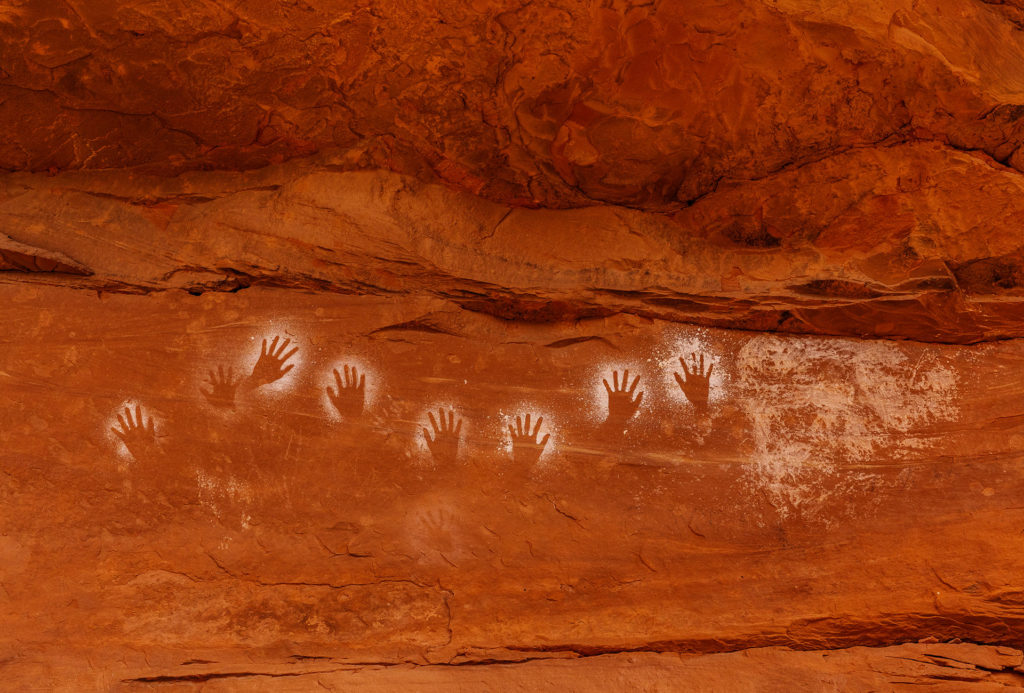
We have been here before.
In 2017, presidential proclamations sharply reduced both monuments. Those decisions sparked years of public engagement, including advocacy, legal challenges, and Tribal leadership. In fact, post-proclamation voting led to a Native American-controlled the San Juan County commission for the first time in history! Ultimately, this public engagement led to the restoration of the monument boundaries.
That history is worth remembering now.
Conservation is rarely a straight line. Protections can be lost and regained. Policies change. New generations step forward. And the enduring power of these places continues to bring people together.
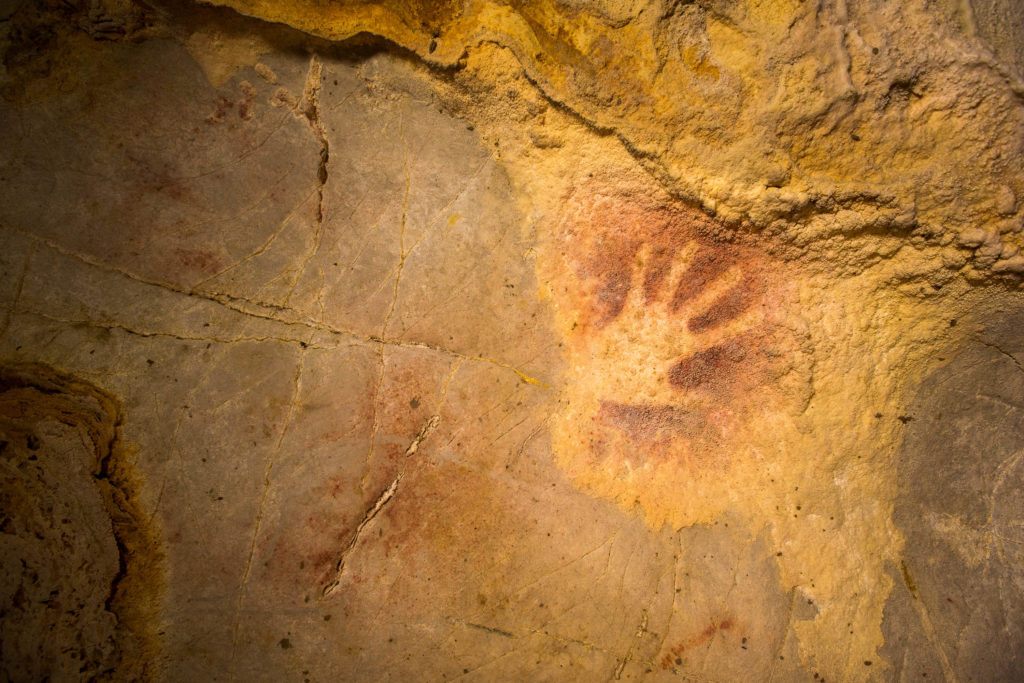
The handprints, figures, animals, and stories preserved across these landscapes have survived for millennia. Our responsibility is to make sure they remain intact for generations we will never meet.
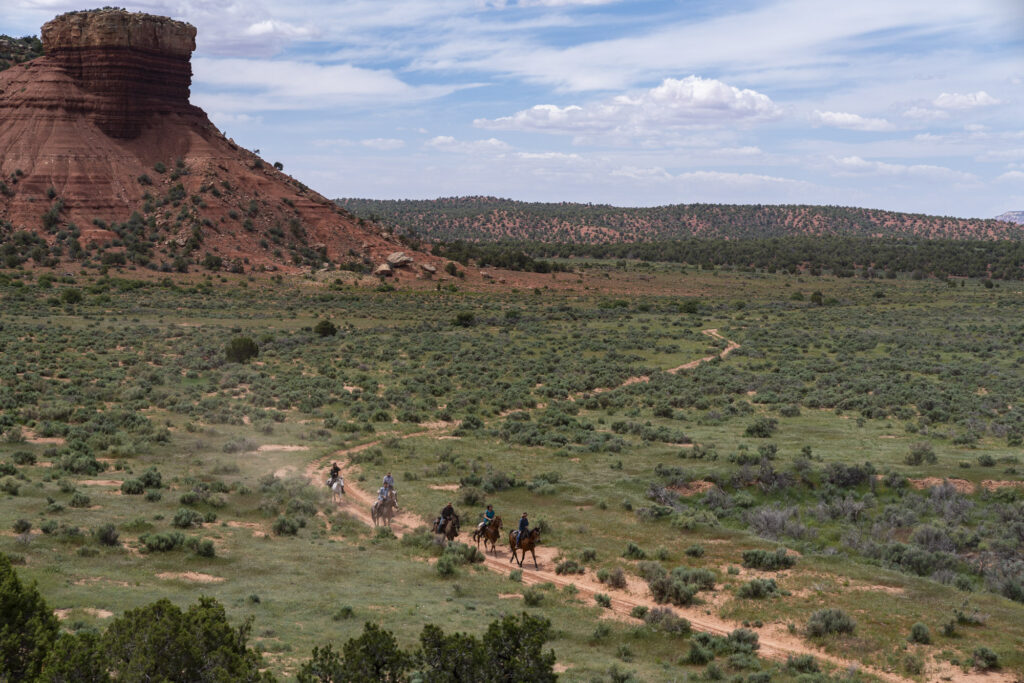
How you can help
Add your voice. Conservation Lands has created a petition supporting national monument protections and provides an easy way to contact your members of Congress. Here’s the link: https://www.conservationlands.org/monuments.
If you choose to contact members of the Utah congressional delegation directly, their names and office information are included below. Again, please be respectful.
Protecting ancient art has always been an act of hope.
The people who created these images left something behind that has endured far beyond their own lifetimes. Today, we have the opportunity, and the responsibility, to do the same.
These places have survived thousands of years. What happens next is not yet written. We hope you choose to take part in this story!
Utah Congressional Representaties
Sen. Mike Lee
- Phone (Salt Lake City): (801) 524-5933
- Phone (DC): (202) 224-5444
- Contact: lee.senate.gov/contact
Sen. John Curtis
- Phone (Salt Lake City): (801) 524-4380
- Phone (DC): (202) 224-5251
- Contact: curtis.senate.gov/share-your-opinion
Rep. Blake Moore (UT-01)
- Phone (Ogden district office): (801) 625-0107
- Phone (DC): (202) 225-0453
- Contact: blakemoore.house.gov/contact
Rep. Celeste Maloy (UT-02)
- Phone (Bountiful district office): (801) 364-5550
- Phone (DC): (202) 225-9730
- Contact: maloy.house.gov/contact
Rep. Mike Kennedy (UT-03, represents both Monuments)
- Phone (Provo district office): (801) 607-3238
- Phone (DC): (202) 225-7751
- Contact: mikekennedy.house.gov/contact
Rep. Burgess Owens (UT-04)
- Phone (DC): (202) 225-3011
- Contact: owens.house.gov