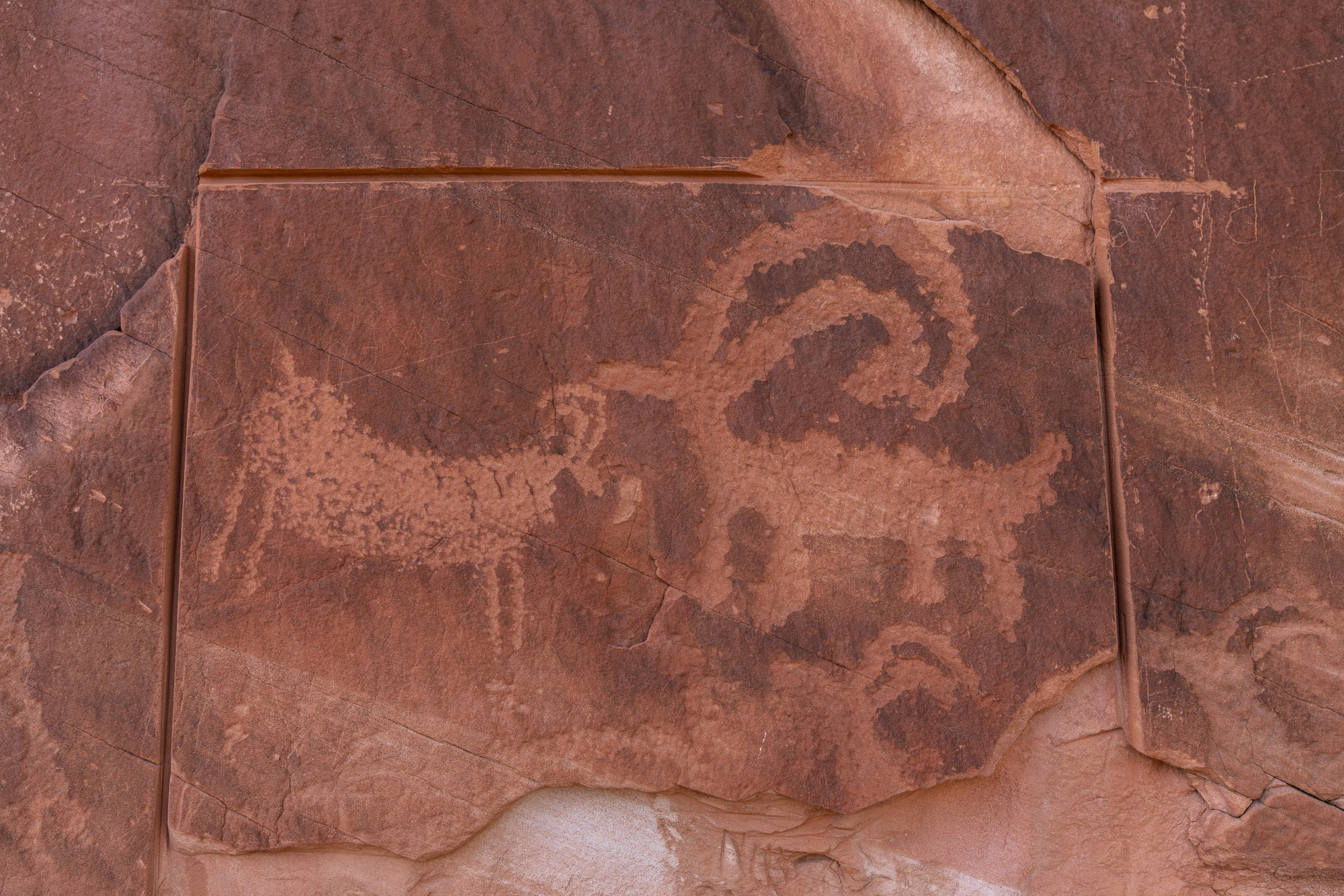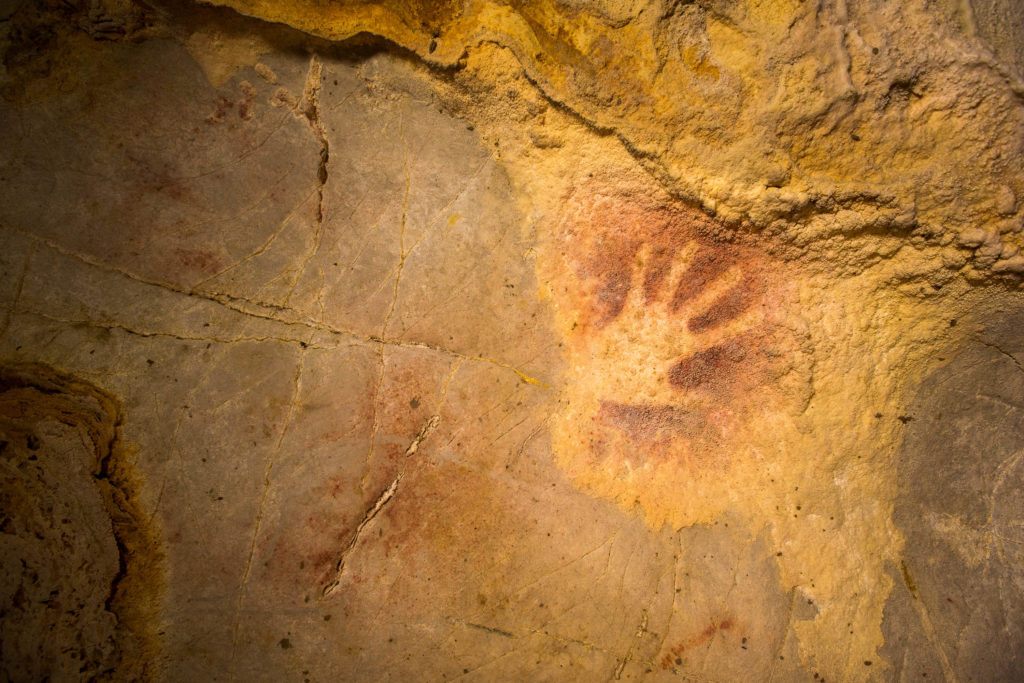
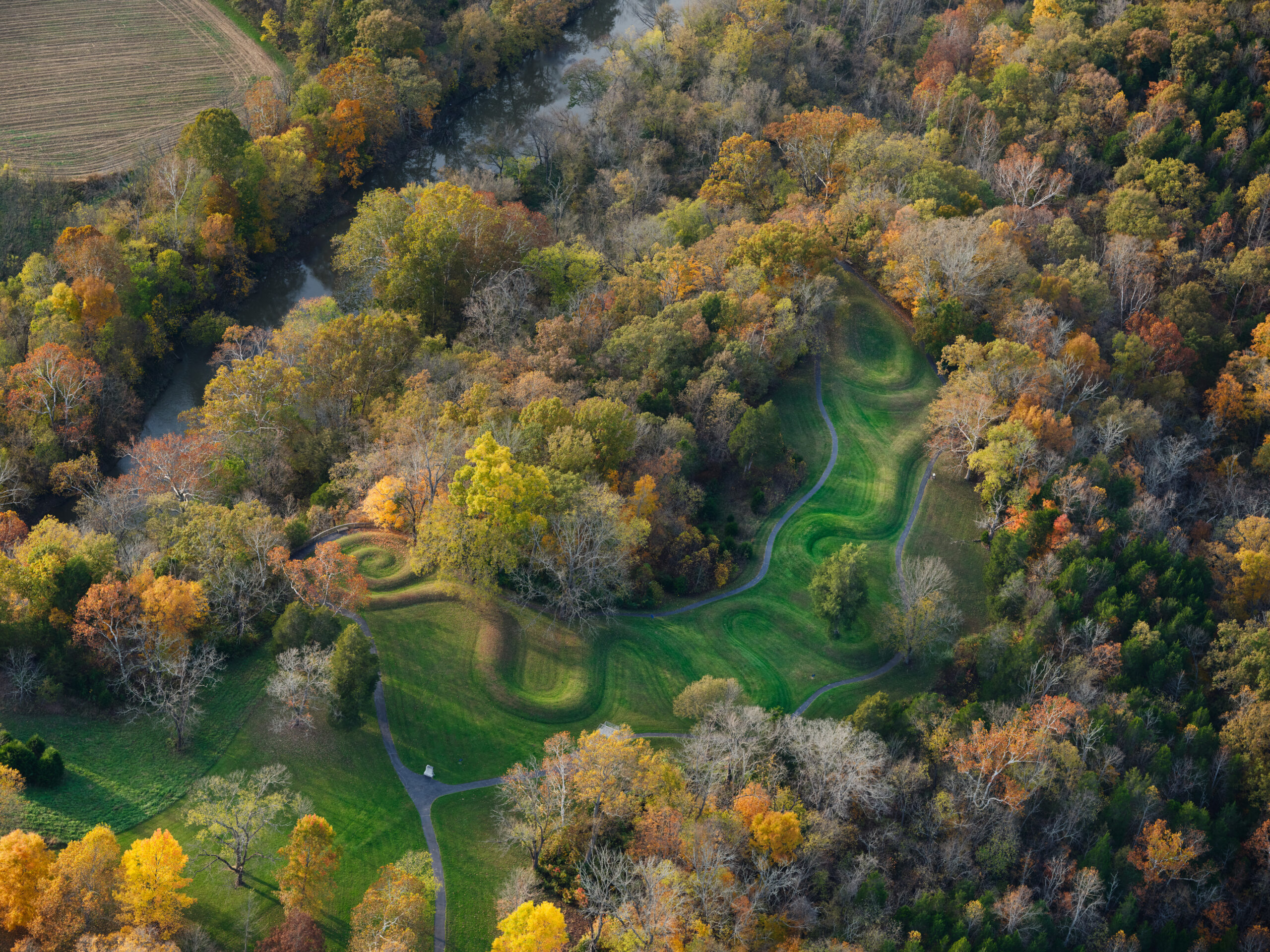
People often ask why we selected the sites we did for Rock Art: An American Story. There isn’t a single answer to that question – and usually it’s a combination. Sometimes it’s the grandeur or location of a site, sometimes it’s the site’s intriguing imagery, sometimes it’s because we have interesting insights into the site’s significance, sometimes it’s because the image I made evokes exactly the emotion I wanted it to.
The reasons for selecting the Great Serpent Mound in Peebles, Ohio are particularly compelling. Not only is it one of North America’s most significant archaeological sites, Serpent Mound is the largest effigy earthwork in the world. It tells us a great deal about the beliefs and practices and capacities of the community that built it. And right now is a landmark moment in its history, because, after almost two centuries of forced removal, the descendants of those who built Serpent Mound are taking decisive action to provide protection and stewardship of the site.
In addition to photographing Serpent Mound, I interviewed Shawnee Chief Ben Barnes, Eastern Shawnee Chief Glenna Wallace, and Ohio History Connection archaeologist Brad Lepper. Ben Barnes also wrote an essay, “On Coming Home,” for the Archive to include in Rock Art: An American Story. Here’s what I learned.
What Is the Great Serpent Mound?
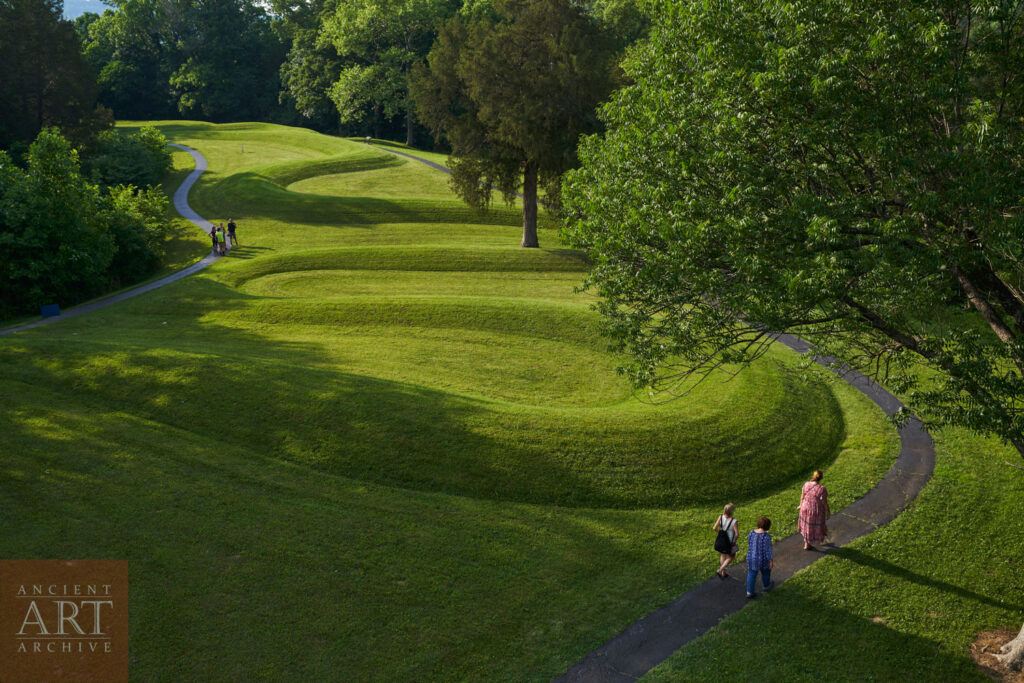
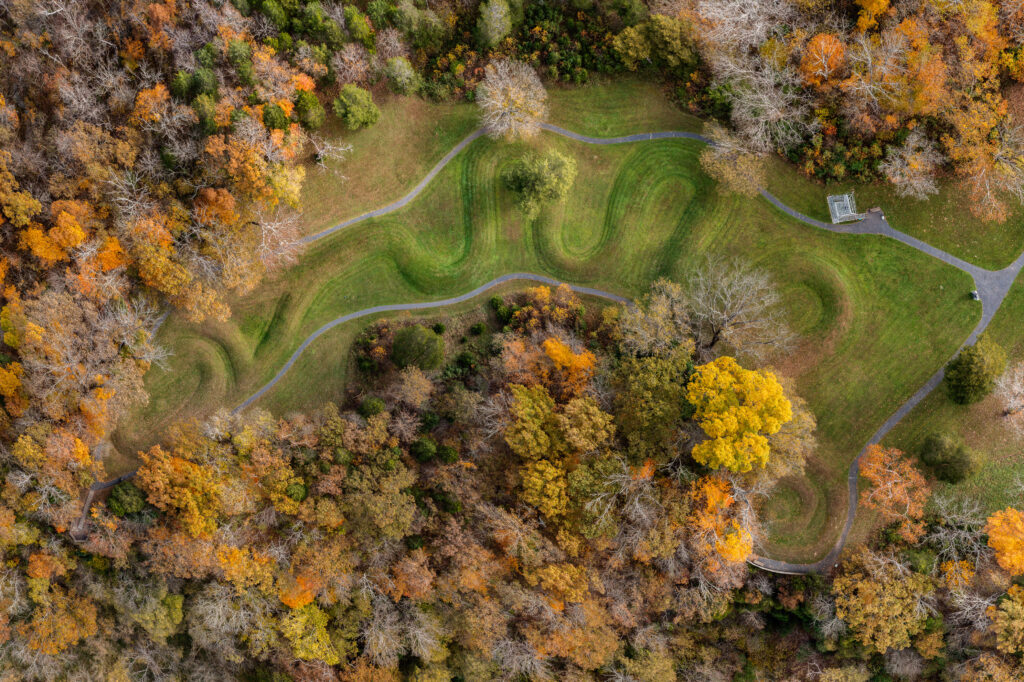
The Great Serpent Mound is a prehistoric effigy mound located near Peebles in Adams County, Ohio. The mound is sculpted three to four feet above the surrounding plateau and follows the curve of a ridge overlooking Ohio Brush Creek. Stretching more than 1,300 feet across that ridge, the serpent’s body bends seven times and its head, which contains an altar, is aligned with the setting sun of the summer solstice.
Today Serpent Mound is managed and preserved by the Ohio History Connection. It is a National Historic Landmark and has been on the UNESCO World Heritage tentative list since 2008. If inducted, it would join the Egyptian Pyramids, Stonehenge, and the Great Wall of China as a protected site of universal cultural value.
Archaeological evidence, including iconographic analysis by Ohio History Connection senior archaeologist Bradley Lepper and colleagues, places its construction in the Fort Ancient cultural period around CE 1100. The serpent’s imagery connects to related pictographs and Indigenous oral traditions across the region.
Serpent Mound’s Cultural Significance
For the Shawnee Tribe, whose oral traditions, clan structures, and ceremonial life connect directly to the serpent as a sacred being, that cultural context is deeply significant.
Chief Wallace offers insight about Serpent Mound’s very existence. Why would a people whose days were consumed by farming, hunting, and sustaining communities invest such enormous labor in building a huge earthwork? “Native American people are spiritual people,” she said. “We feed our souls.” She shared a personal analogy: no matter how many hours she works, she goes home to tend her flower garden. “I must feed my soul. That is exactly what our people need, want, practice, live.” She believes the same spiritual necessity drove her ancestors to build Serpent Mound.
Chief Barnes thinks of the Great Serpent Mound not as an archaeological puzzle but as “a constructed, conceived work of art” using soil as the medium. He explains that his ancestors “conceived this project. They planned the project. They executed the project as a community. My people were artists and the chosen media was soil. This is an amazing thing, because we’re the people that tame beans and corn, and that makes total sense that we play with soil and create art with soil.”
What Chief Barnes most wants visitors to carry away is not the serpent in isolation but the community it reflects. “There was a village here once, and that village had people. There were ladies of that village, people’s grandmothers, there were children. You could hear laughter, here, from those children. The vision and the creativity of those people is what was important.”
The Cost of Removal
The Indian Removal Act of 1830 did exactly that: it removed Indigenous people from their lands. Chief Wallace told me that the Eastern Shawnee were a people who had lived across large parts of the continent. In 1832 they were forced to walk nearly 800 miles to Indian Territory. Many died on that trip. By around 1900, the Eastern Shawnee had been reduced to 69 people. Today they number more than 3,600. Their tribal history is titled “Resiliency Through Adversity.”
“For us here, knowing that we were removed and this was lost from us, the name of this place was one of those things that we lost,” Chief Barnes explained. “And what happened as a consequence was a vacuum, a vacuum of indigenous voice.” Voice – and knowledge. He put the cultural cost in sharp relief by comparing the Shawnee to the Stó:lō people of British Columbia, who were never removed from their ancestral lands. The Stó:lō kept the names of their places, their relationships with mountains and rivers as living entities, their cosmological vocabulary intact because they never had to leave.
The 2021 Summer Solstice and the Shawnee Return
The summer solstice alignment at Serpent Mound is one of the most important astronomical and cultural events at any Native American site in the United States. The serpent’s head aligns with the setting sun on the longest day of the year. It’s a deliberate feature built into the mound by its Indigenous architects.
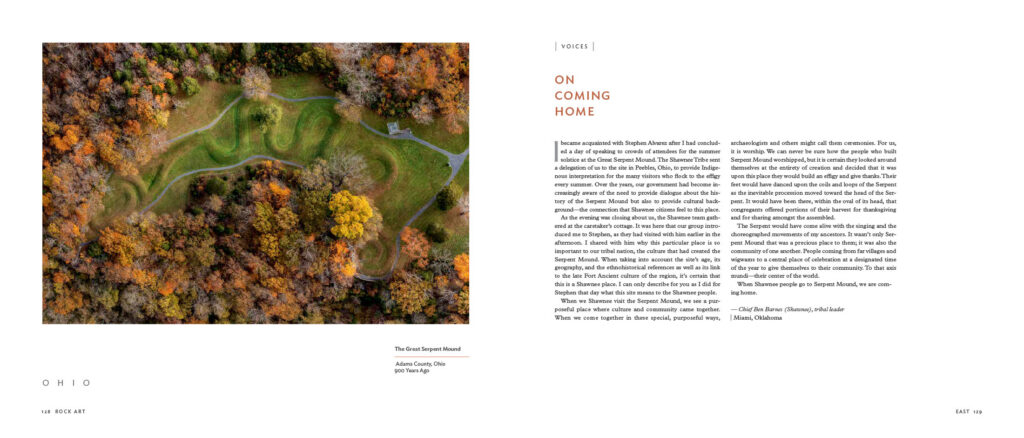
On June 20, 2021, for the first time in nearly two centuries, the Shawnee Tribe officially led the interpretation of Serpent Mound at the summer solstice, in partnership with the Ohio History Connection. Standing at the head of the serpent, Chief Barnes described what worship at this place would have looked like. “When we come together in these special, purposeful ways, archaeologists and others might call them ceremonies,” he writes in Rock Art: An American Story. “For us, it is worship. The Serpent would have come alive with the singing and the choreographed movements of my ancestors.”
The following day, Chief Glenna Wallace of the Eastern Shawnee Tribe of Oklahoma spoke at the same mound. Wallace had been fighting for exactly this kind of recognition for years. Her sustained advocacy alongside the Ohio History Connection and tribal partners across Oklahoma had already produced one historic result: UNESCO World Heritage designation for the nearby Hopewell Ceremonial Earthworks — including the Newark Earthworks — inscribed on September 19, 2023 as the United States’ 25th World Heritage Site. Serpent Mound remains on the UNESCO tentative list, and the Shawnee are actively working toward its inscription.
The Shawnee Land Acquisition: Protecting Serpent Mound’s Future
Chief Wallace frames the importance of preserving the site quite simply: “We couldn’t have the spiritual part if we didn’t have the physical part. The two are intertwined, and both are important and both need to be preserved.”
The site’s present owner, The Ohio History Connection, has been a leader in indigenous partnerships for stewardship and is committed to preserving the site for future generations. The next logical step is for the affiliated tribes to actually own the adjacent land.
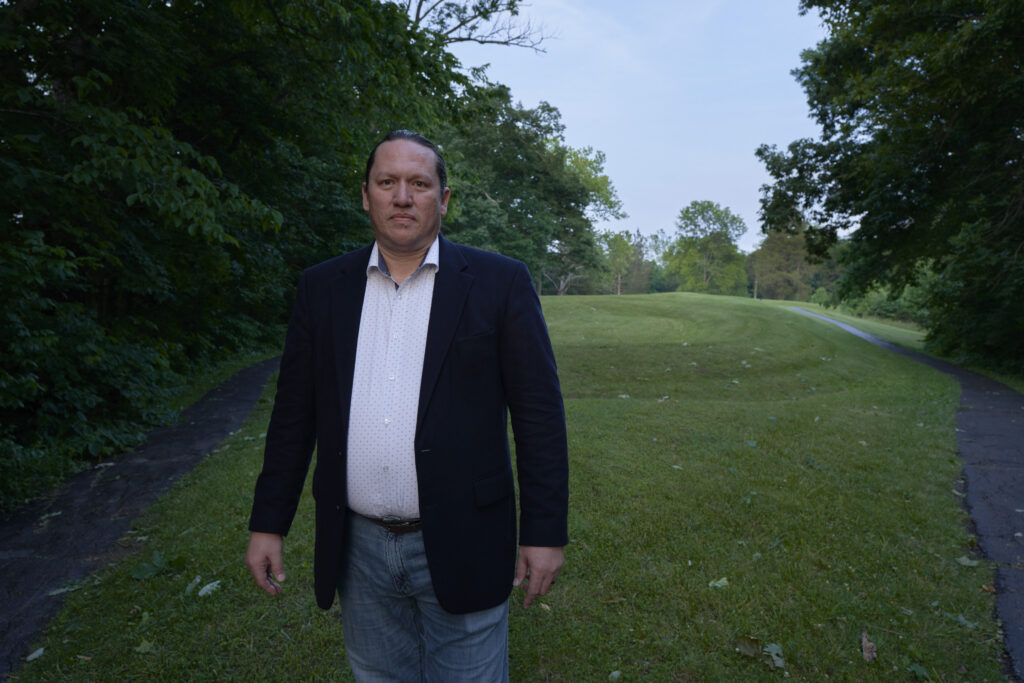
In 2026, Chief Barnes announced that the Shawnee Tribe has purchased a parcel of land directly bordering Serpent Mound. Another location is in active negotiation.
“It’s our hope that the acquisition of that parcel is the first of many to securing a buffer around Serpent Mound so that we can help preserve that site in perpetuity,” Barnes said. “These are lands that were originally homelands to Shawnee people. It’s where we are from, it’s the site of our beginnings. These places need to be protected. And if we don’t advocate, fight for the beautiful things of this world, those things will be consumed.”
As Chief Barnes wrote in Rock Art: An American Story, it was not only Serpent Mound that was precious to his ancestors, “it was also the community of one another. People coming from far villages and wigwams to a central place of celebration at a designated time of the year to give themselves to their community. To that axis mundi — their center of the world.”
The Shawnee are making sure that center has land under it again.
Serpent Mound is located at 3850 State Route 73, Peebles, Ohio 45660, and is managed by the Ohio History Connection. It is open Tuesday through Sunday. The summer solstice is one of the best times to visit, when the serpent’s head aligns with the setting sun.
Further Reading
- Lepper, B.T., Duncan, J.R., Diaz-Granados, C., and Frolking, T.A. (2018). Arguments for the Age of Serpent Mound. Cambridge Archaeological Journal, 28(3), 433–450.
- Shawnee Tribe land acquisition, KOSU/KGOU, June 2026
- Hopewell Ceremonial Earthworks — UNESCO World Heritage Site
- Serpent Mound — UNESCO Tentative List