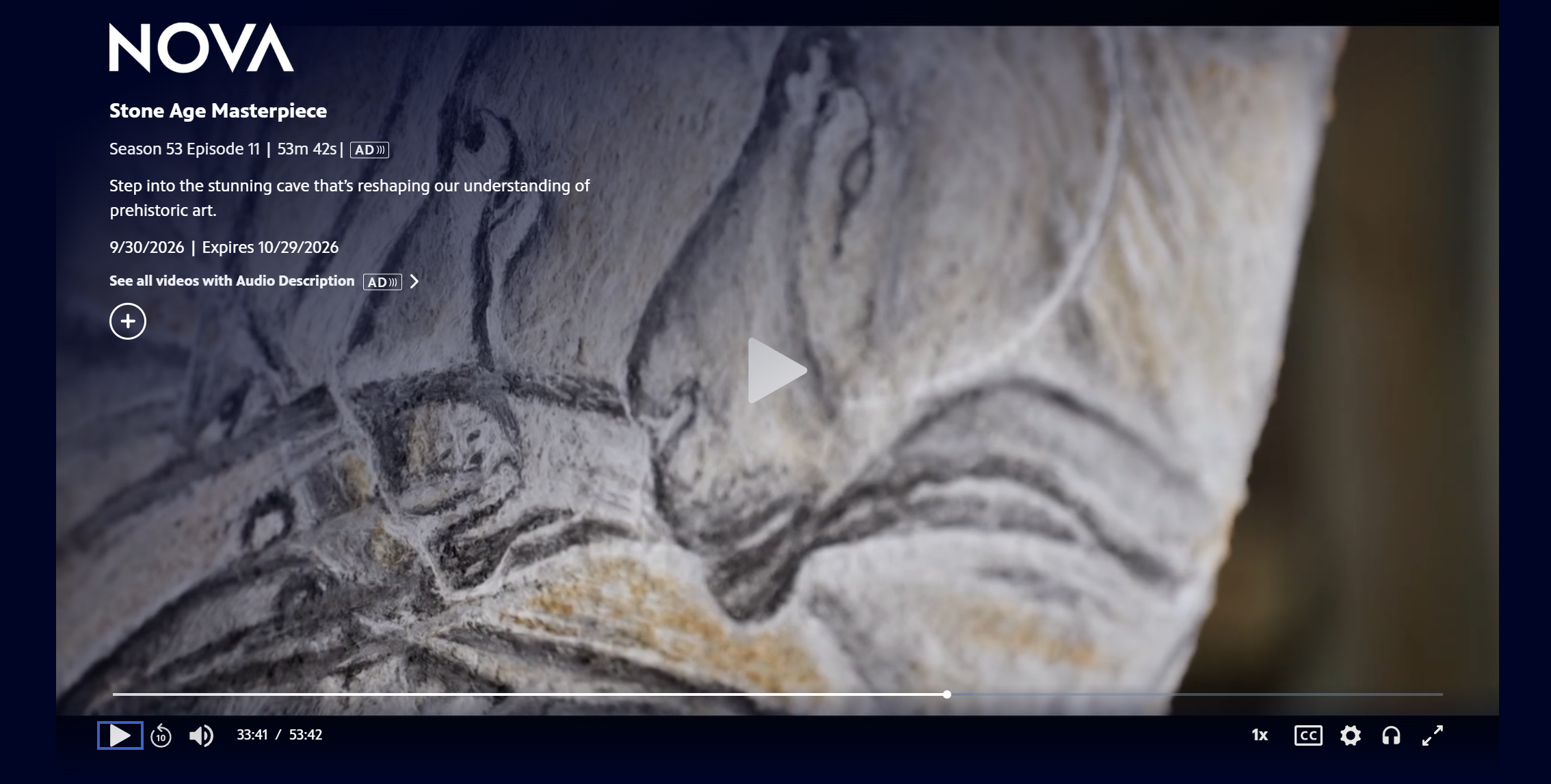
Very few people will ever stand inside Chauvet Cave. The French government controls access, the public is not allowed in, and even the scientists who study it work under strict limits. That makes NOVA’s new film, Stone Age Masterpiece, a rare thing: nearly an hour inside one of the most important art sites on Earth.
The episode (Season 53, Episode 11) premiered September 30 on PBS and is streaming free on pbs.org through October 29, 2026. Watch it while you can.
Watch NOVA: Stone Age Masterpiece on PBS
What the film covers
Chauvet was sealed by a rockfall more than 20,000 years ago and rediscovered in December 1994 by Éliette Brunel, Christian Hillaire, and Jean-Marie Chauvet. Radiocarbon dates from charcoal put the drawings at more than 37,000 years old, nearly twice the age of Lascaux.
NOVA follows the research team as they rebuild the cave’s whole history, starting with the limestone itself. Cave bears moved in about 48,000 years ago. Feeling their way along the walls in total darkness, they polished the rock smooth and left hibernation hollows in the clay floor. Paleontologist Philippe Fosse compares them in size to modern grizzlies and Kodiak bears.
Around 37,000 years ago, Aurignacian people arrived carrying torches. Catherine Ferrier and Jean-Claude Leblanc rebuild those torches, then recreate the enormous fires whose scorch marks still mark Chauvet’s walls. Their temperature data show the fires were far too hot to stand beside. So what were they for? Lighting the art? Ceremony? The question is still open.
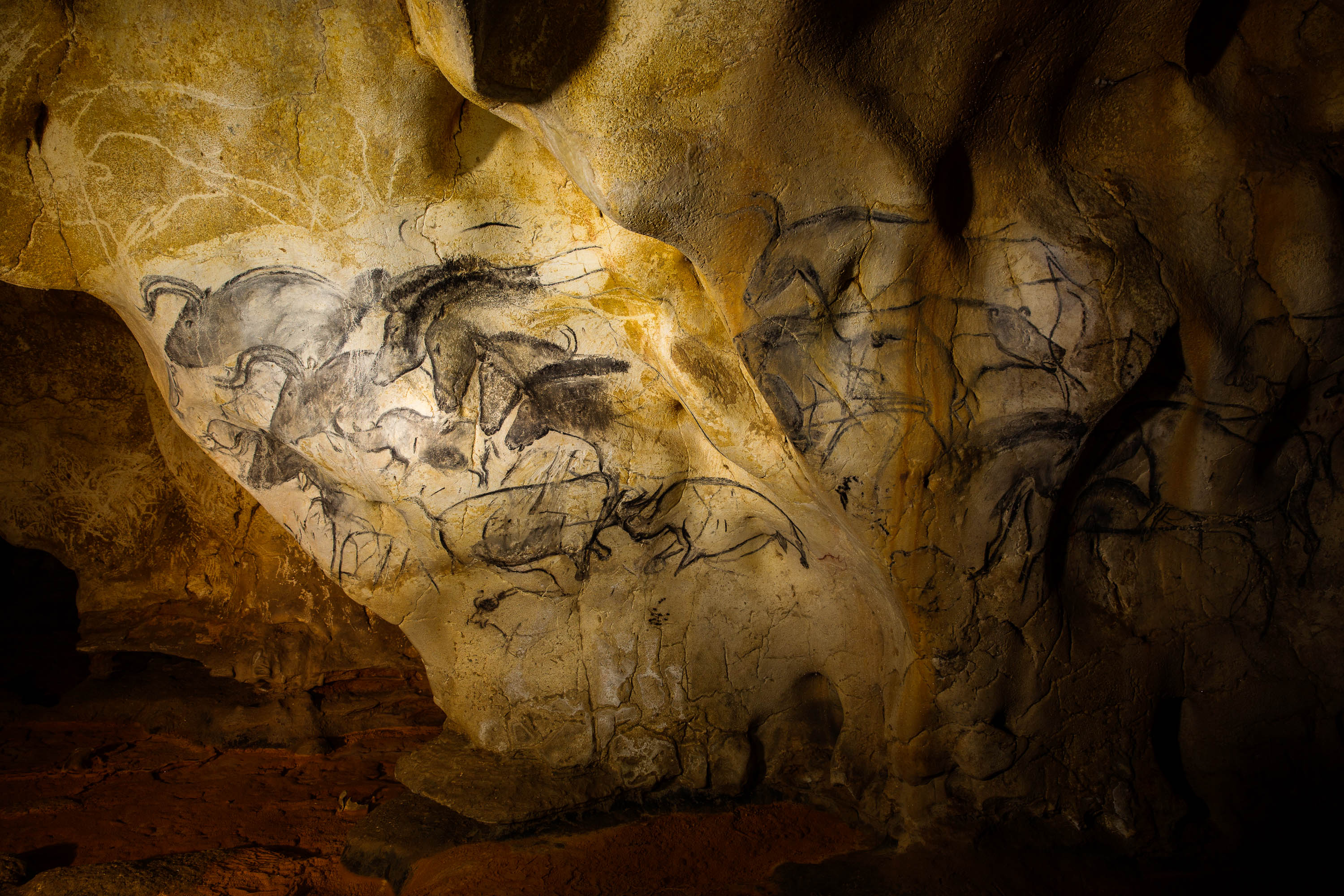
The heart of the film is the art: the Panel of the Horses, an owl in the Hillaire Chamber, a cave bear skull resting on a stone block in the Skull Chamber, and the great Lion Panel in the End Chamber. Prehistorian Marc Azéma argues that animals drawn with extra legs and heads were a way of showing motion, which makes Chauvet a candidate for the birthplace of cinema. Artist and researcher Gilles Tosello explains how Chauvet overturned the old idea that art began crude and slowly improved. The oldest art in the cave was already masterful.
Near the end, Bernard Gély, who received the first phone call about the discovery, puts it simply: “It’s the dawn of time. It’s another world. And yet, it’s us.”
Six hours in Chauvet
In 2014, National Geographic assigned me to photograph Chauvet for “The Origins of Art,” published in the January 2015 issue. Getting in took two years of requests to the French Ministry of Culture. The answer was six hours: three trips of two hours each, working from the narrow metal walkway with LED cinema lights that give off no heat or ultraviolet light.
What I wrote for National Geographic afterward still holds: “Standing in front of a 35,000-year-old painting, every possible thing separates me from that painter. We share no language, no culture.” And yet “the images on the wall transcend time, erase barriers, and let those artists speak as clearly as if we were in the same room.”
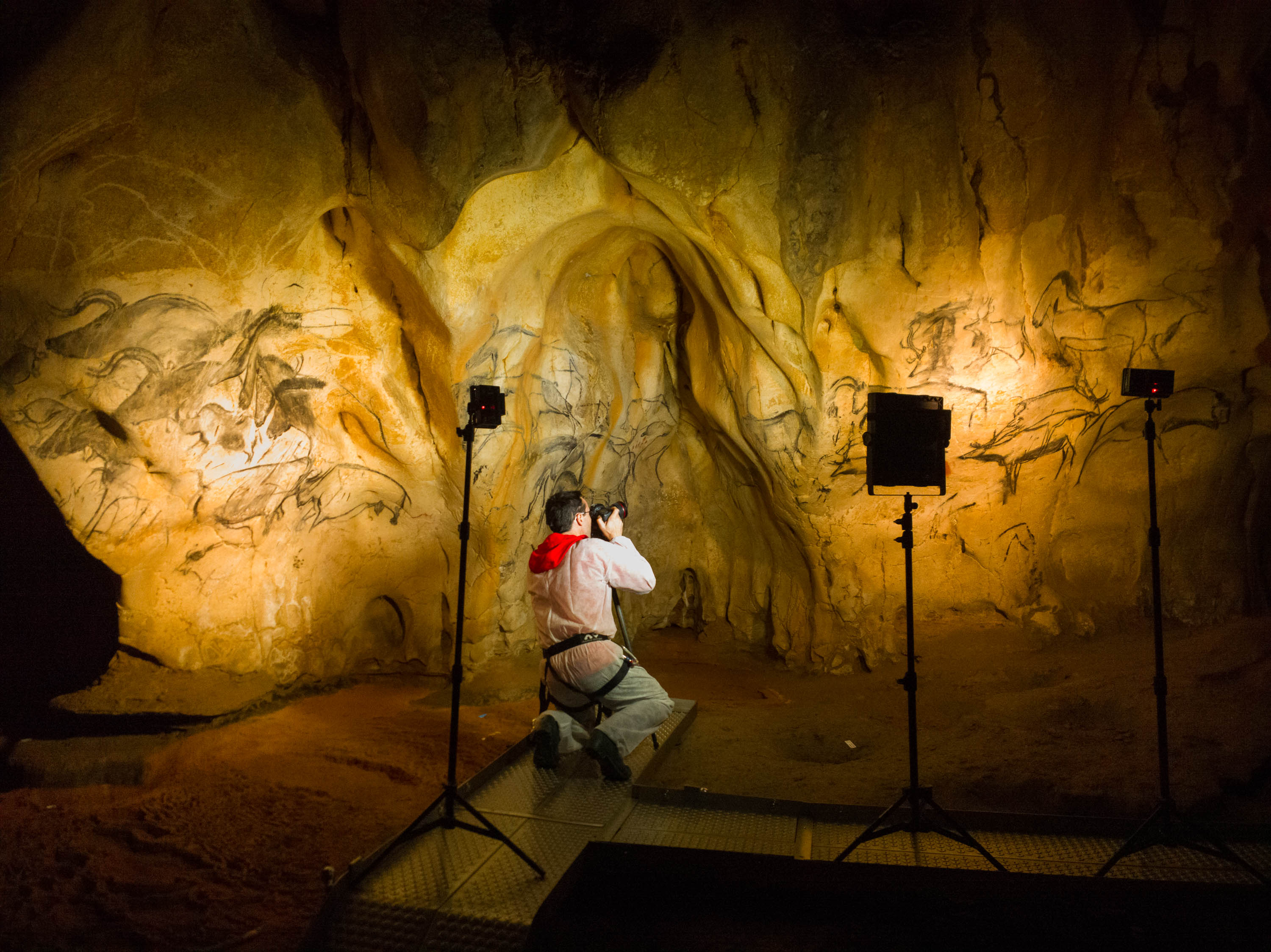
Those photographs went on to do something nobody planned. The eight frames shot for a panorama of the Lion Panel were later rebuilt into a 3D model of the Lion Panel, and the idea behind it, that a photograph can be an archive, became the Ancient Art Archive. NOVA’s crew is working in the same spirit: the film describes their detailed photography of the cave as an archive for future study.
Bring Chauvet home
Twelve photographs from Chauvet are available as a limited edition portfolio at Alvarez Photography. Each image is limited to 12 prints. Once they are sold, there will be no more. Prints are approximately 21 x 33 inches on 2 x 4-foot paper.
Every print sale supports the Ancient Art Archive and our work to preserve and share humanity’s oldest stories.
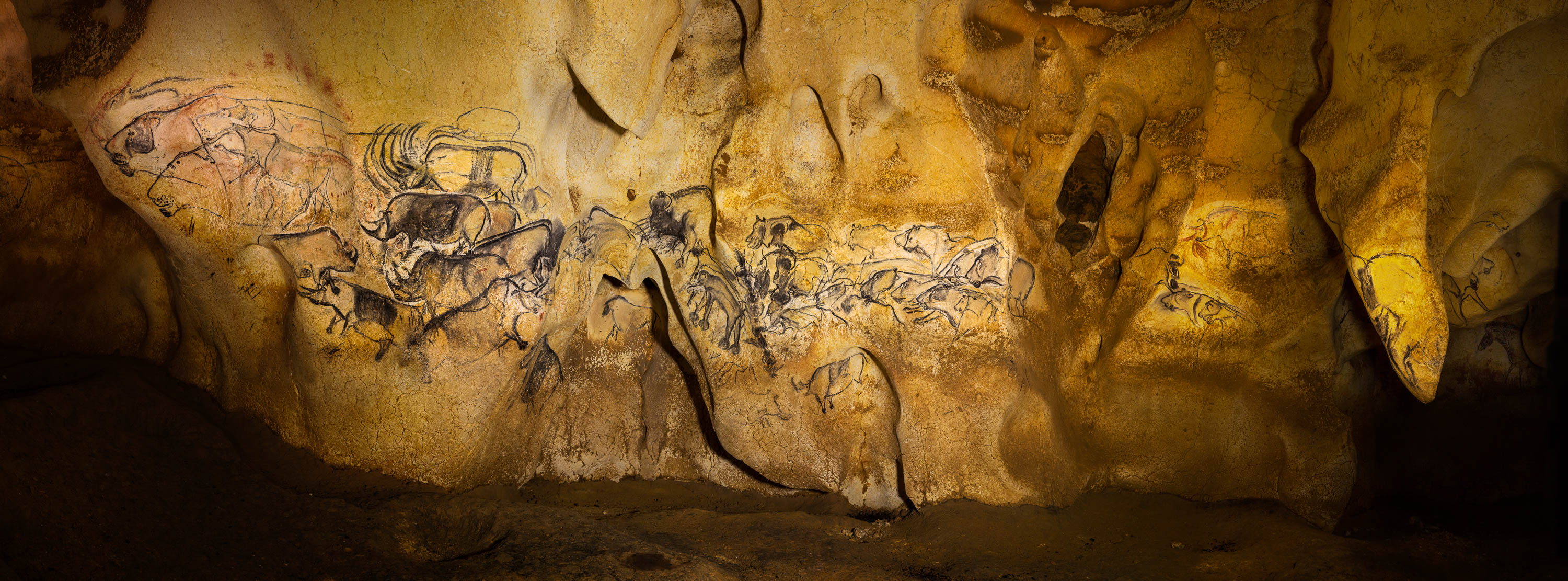
Chauvet Limited Edition Portfolio
12 images. 12 prints of each. Approximately 21 x 33 inches.
Every sale supports the Ancient Art Archive.
Watch, then go deeper
- Watch Stone Age Masterpiece free on PBS before October 29.
- Explore the 3D Lion Panel and the full story of photographing Chauvet.
- Own a piece of it with a print from the Chauvet Limited Edition Portfolio.
- Support the archive directly by donating.
-Stephen Alvarez