Last month I went to Chaco Canyon in northern New Mexico, slipping in between the severe storms that have battered the Four Corners region in this super El Niño year.
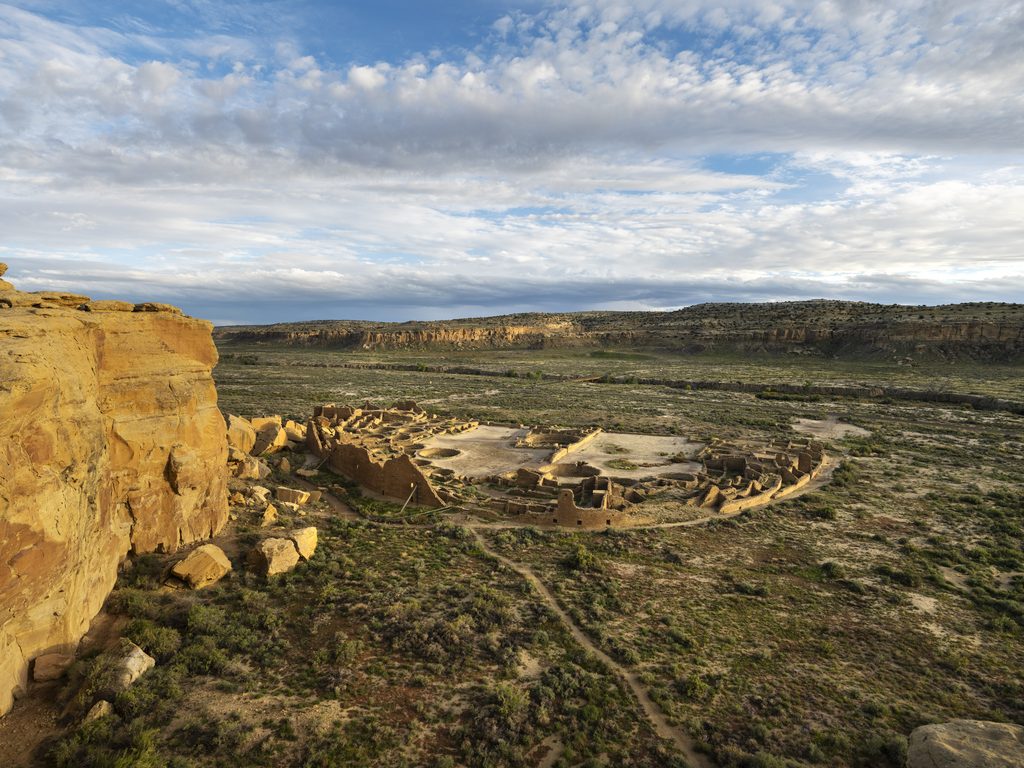
For nearly 300 years, between 850 and 1125 CE, something extraordinary happened in this canyon. Ancestral Puebloan people began building on a scale no one in this part of the world had seen before: great houses with hundreds of rooms, aligned with the movements of the sun and moon, and long, straight ceremonial roads running up to 35 miles. Archaeologists call it the “Chaco phenomenon.” The architecture it produced was unlike anything else on the continent, and Chaco remains a sacred place to the Pueblo people who trace their ancestry here.
A star in the daytime sky
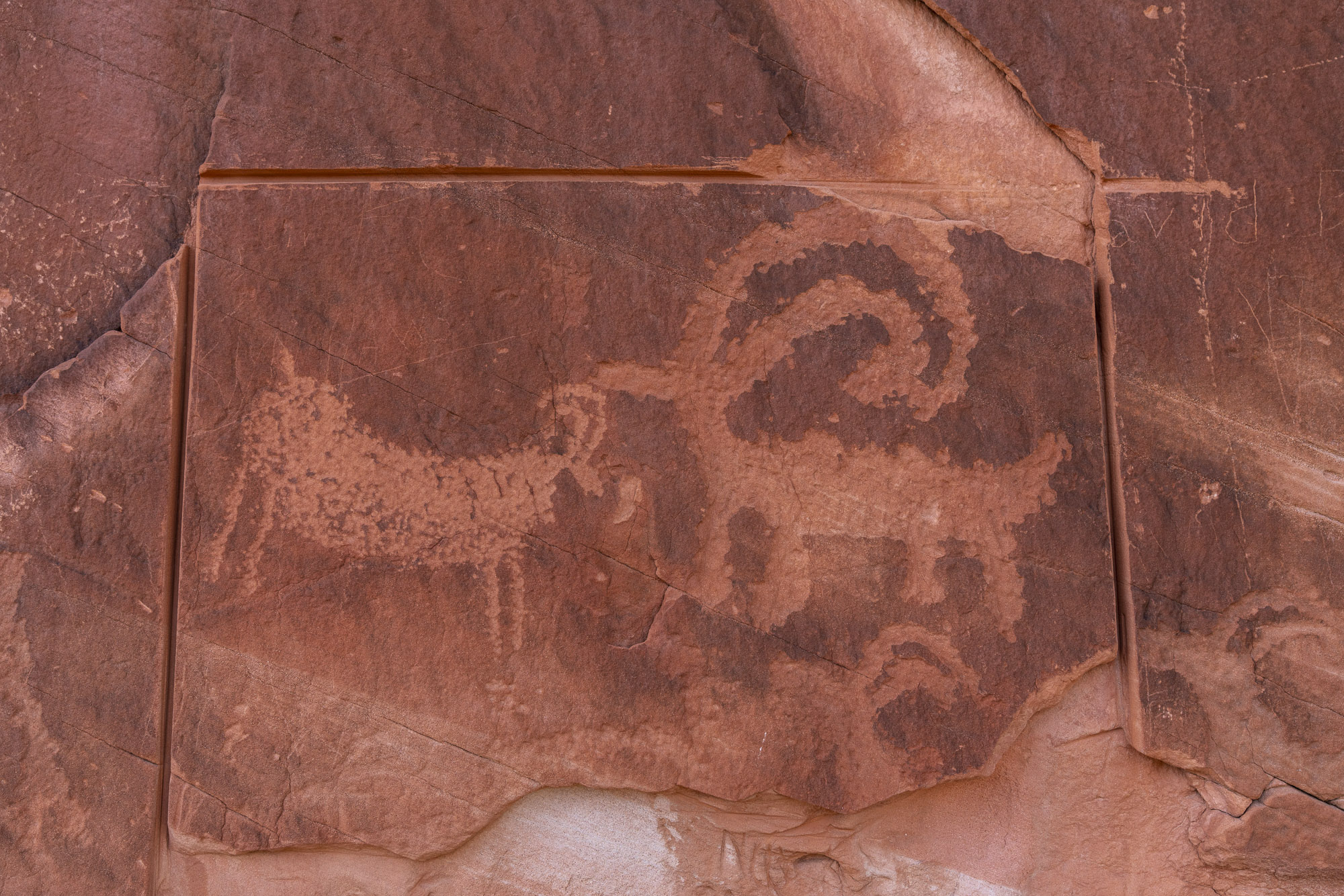
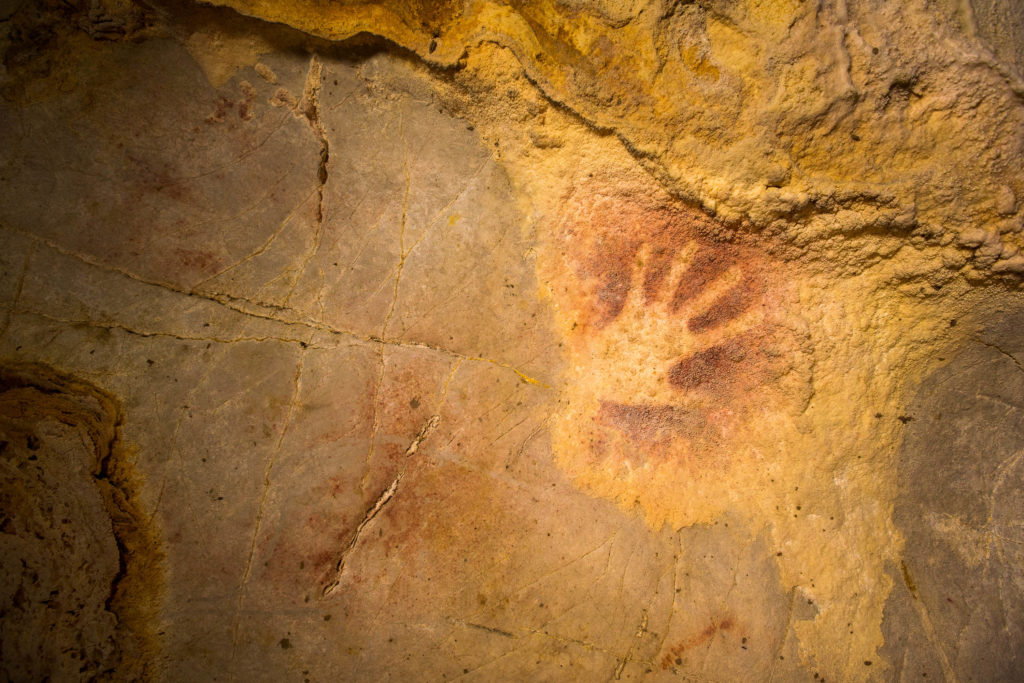
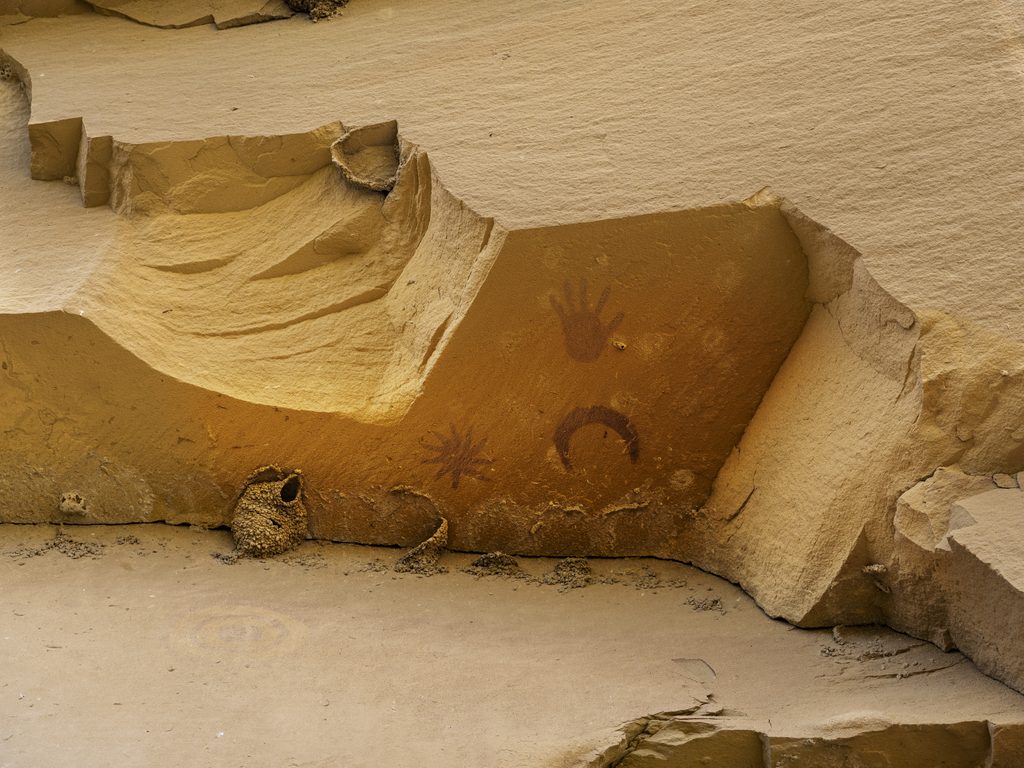
Chaco also holds rock art. The most famous image is thought to record the supernova first seen on July 4, 1054 CE (SN1054), the explosion that produced the Crab Nebula. The evidence is circumstantial but compelling. Chinese and Japanese astronomers recorded SN 1054, which was visible in daylight for 23 days and was the brightest object in the sky after the sun and moon. At dawn on July 5, 1054, a thin crescent moon rose over Chaco with the new star just beside it, the same pairing shown in the painting. The great house of Peñasco Blanco, on the mesa directly above the pictograph, was occupied at the time.
Astronomy runs through Chaco. Researchers with the Solstice Project have found that twelve of the major Chacoan buildings, eight in the canyon and four beyond it, are oriented to solar and lunar cycles. For people who watched the sky this closely, it is entirely believable that they would record a star bright enough to see at midday.
Why this year
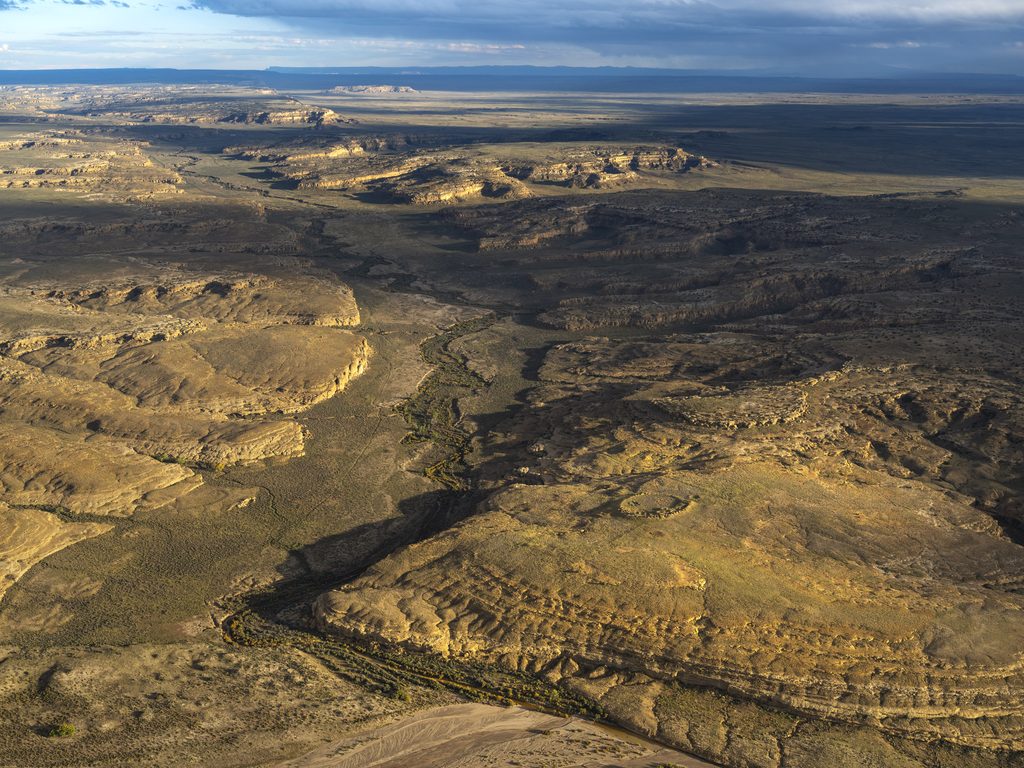
The reason to photograph Chaco now is the land around it. Since 2023, a 10-mile buffer of federal land around the 34,000-acre Chaco Culture National Historical Park has been closed to new oil and gas leasing. That protection is now being challenged. This may be the last chance to document the canyon from the air without energy development in the background. The severe flooding that came with this year’s extreme weather was one more reason to get into the field now.
The view from above
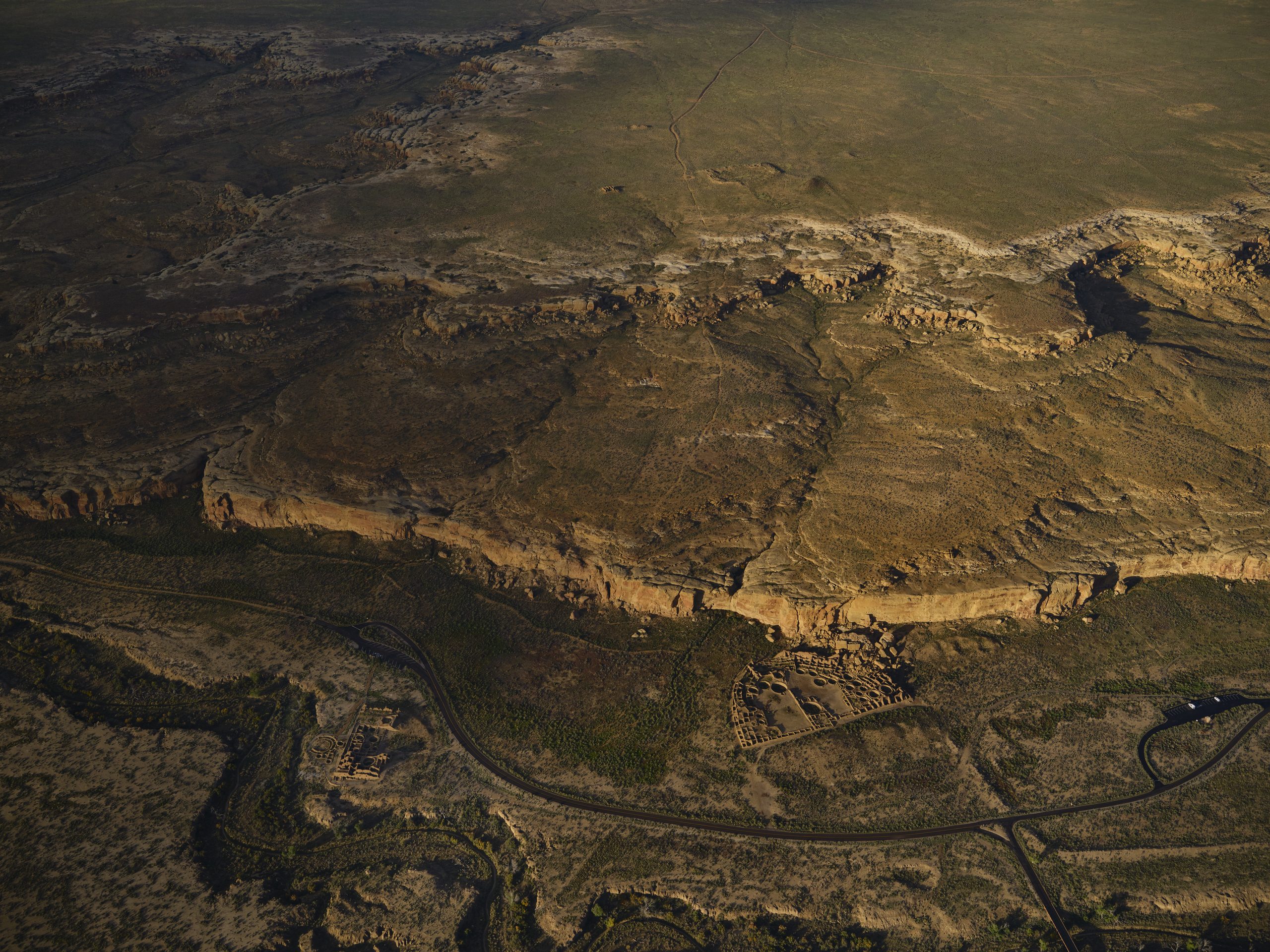
Chaco is spectacular from the air. From above, the scale of the whole undertaking comes into focus. The great houses took more than 240,000 timbers, each cut from a single conifer and carried by hand from mountains 75 kilometers or more away. The effort is simply breathtaking.
At the Ancient Art Archive, our work is to preserve and share humanity’s oldest stories, and sometimes that means getting to a place before it changes. These images are a record of Chaco as it looks today, with its landscape still intact.